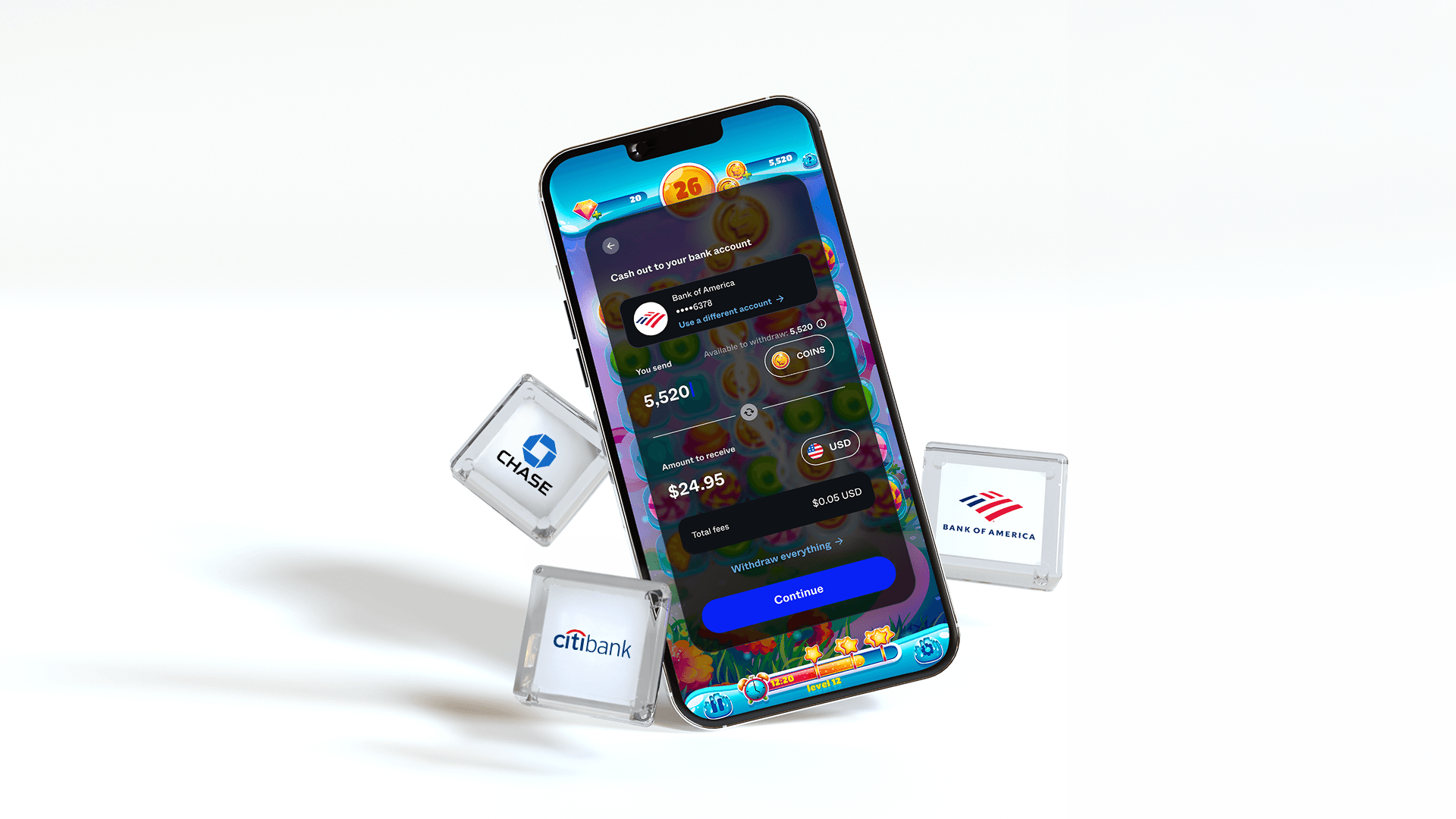
Rewards are proven to help studios strengthen engagement, retention, and lifetime value by making real-world value part of the gameplay loop. Direct bank cash out takes that one step further. Users can now earn value inside the game and move it straight into their bank account, making rewards more accessible, and usable in everyday life.
That shift matters because usability drives perception. When rewards connect directly to a familiar “true” banking experience, they carry more weight than traditional rewards like gift cards and feel more closely tied to the time users spend in the game.
A stronger rewards experience for users
Games already do a great job of motivating action through progression and engagement. Direct bank cash out extends that by connecting in-game earning with a widely understood real-world value. The entire experience remains fully embedded in the app, keeping the rewards journey simple and intuitive. Users link their bank account once through a secure flow, and from that point on, cash outs can be initiated in just a few taps without disrupting the session.

That familiarity is especially relevant for younger audiences who are highly engaged with reward systems but still place significant trust in traditional financial infrastructure. In ZBD’s Gen Z payments research, 70% said they expect to earn rewards while using apps and playing games, while 68% said they trust traditional banks. The takeaway is straightforward: users are open to new reward experiences, but familiar payout rails still matter. Connecting rewards to those rails makes them easier to understand and adopt.
At the same time, as the cost of living rises and financial pressure increases, flexibility becomes more important. Cash in a bank account is fundamentally more useful than value locked into specific platforms or reward formats.
It also changes how users perceive their time. Earning something that can be deposited and used freely feels closer to productivity than pure entertainment. That subtle shift can make engagement feel more meaningful over time.
Why this matters for game growth
This new feature strengthens the role embedded rewards can play as a growth lever for mobile games. Studios are under pressure to grow LTV in a tougher environment. Installs have flattened across many genres, user acquisition is harder to scale efficiently, and more growth now depends on improving retention, engagement, and monetization after install.
Embedded rewards help tackle this challenge by increasing session depth, frequency, and overall engagement. As users retain better and interact more with the core game loop, monetization systems can perform more effectively and UA ROAS can also improve as a result. All this translates into stronger long-term LTV.
Direct bank cash outs sharpen that effect by making users clearly understand the value they’re earning and letting them access it easily. It also introduces a potential new behavioral loop: users earn real money through gameplay, receive it in their bank account, and can then use those same funds for in-app purchases. For example, a user earns $2 through gameplay and is considering a $10 IAP. That earned value effectively feels like a partial offset of the purchase, and can be a strong motivator to initiate the purchase. This aligns with a growing trend toward more flexible spending paths, including the increasing importance of DTC channels for developers.
Because value flows through the same real-world account, the loop stays continuous. That dynamic doesn’t exist in closed systems like gift cards, where value is locked for use at a specific destination, like Amazon, Starbucks or App Store. When the entry and exit points are aligned, engagement, earning, and spending can reinforce each other more naturally.
How it works
From a user perspective, the flow is simple. Users:
- Earn rewards through gameplay-linked actions such as progression, milestones, and live-ops events
- See the value accumulate in the game’s native currency–be it coins, gems, points or anything else–alongside a real-world value equivalent, like USD
- Link their game account to the bank account with a one-time linking flow
- Cash out directly to their bank account within the app experience

For developers, this is implemented through the Unity SDK, which is designed to integrate seamlessly into the game’s existing UX. This allows studios to embed payouts directly into their gameplay experience.
ZBD handles the full payout infrastructure, settlement, and compliance, allowing studios to focus on designing the reward experience to encourage the actions they want to see more of.
Closing the loop on rewards
One of the biggest limitations with in-game rewards has been the final step of withdrawing. Most reward systems stop at in-app redemption options, gift cards, or digital apps like CashApp or PayPal. Direct bank cash out extends that model by completing the full loop: earning and payout, fully embedded within the app experience, without relying on third-party reward platforms.
At the same time, it doesn’t replace other payout options. Studios can choose how users access their rewards, while users can select from the available options based on their preferences. Whether that’s bank accounts, digital wallets, gift cards or other formats, flexibility matters, as different users value different types of rewards.
For studios, that strengthens the same core mechanic: rewarding engagement with real value, delivered in a way that feels immediate and intuitive. As users place more importance on value for their time, games that can return that value seamlessly are better positioned to build long-term loyalty and sustainable monetization.
If you’re already a ZBD partner, reach out to your account manager to enable bank cash out in your game.